Tuesday, October 20, 2015

Monday, October 5, 2015
Carrom
The Rules of Carrom
Carrom or Karom is a game that has long been played throughout India and South East Asia but the game has become increasingly popular throughout much of the rest of the world during the last century. There are a huge number of variations in the rules even though an international regulatory body and several major national bodies exist - even these have rule variations depending upon the situation. Masters Games has based the following rules on those from the UK Carrom Club, tailoring them for simplicity where possible.
Note: 1 inch = 2.54cm.
Equipment
The following dimensions vary considerably and are given only as an example of a tournament board. A Carrom board is a square smooth flat wooden board that can be 72cm or 74cm square and which should be positioned 60 - 70cm above the ground. In each corner is a circular hole that can be 51mm in diameter and underneath each hole is a net to catch the pieces in a similar way to a snooker table. Two lines are drawn on the table along the diagonals. These are the "foul lines". In the centre are two concentric circles - the centre circle is the size of a piece, the main circle having a diameter about six times larger. Outside the circles and a short way in from each side of the board are two straight lines parallel with the edge of the board. They should be about 3.8cm apart and the long thin area between them is terminated just before the diagonal foul lines at either end by a red circle of 3.8cm diameter. This thin rectangle with circles at either end is called the "baseline" and the baseline nearest to a player is the area that the player's striker must be played from.
There are nine dark or black pieces and nine light or white pieces plus a red piece called the "Queen". The smooth wooden pieces are slightly smaller than the the striker which is between 3.8cm and 4.4cm in diameter. People often own their own strikers which can also be made of bone or ivory and which are normally somewhat heavier than the pieces although can vary in weight from half as heavy to four times as heavy as a piece. On some boards, potato starch, chalk dust or other lubricant is used to make the pieces slide more easily over the surface of the board - the most popular lubricant is boric acid.
Preparation
The game is played by two opponents sitting opposite each other. To decide who goes first, one player should hold a piece concealed in one hand. If the opponent guesses correctly which hand, the opponent chooses who goes first, otherwise the player concealing the piece chooses. The person who plays first aims to pocket the white pieces.
To begin, the Queen is placed in the centre of the board. Six pieces are put around the Queen directly in a circle, each touching the Queen and their neighbours. The remaining twelve pieces are positioned around the inner circle of six pieces, so that each outer piece touches the inner circle. Both circles should have the pieces alternating in colour. The two circles are oriented so that the Queen, a white piece from the inner circle and a white piece from the outer circle lie in a straight line pointing towards the centre of the side of the board where the player who will play first is sitting.
Objective
Players take turns to play. A turn consists of one or more strikes. A player wins by pocketing all of the pieces of their chosen colour first. However, neither player can win until one or other player has "covered the Queen". To cover the Queen, a player must pocket one of her own pieces immediately after pocketing the Queen. If the Queen is pocketed but not covered, the Queen is returned to the board. Both players normally try to cover the Queen in addition to trying to win the game because a player who wins and also covers the Queen receives bonus points.
Striking
- For each strike, the player must position the striker within the baseline OR on one of the two circles at either end of the baseline.
- A striker within the baseline must touch both the front line and the rear line.
- The striker may not "cut the moon" - be placed partially within the baseline and partially within the circle.
- The player must flick the striker with one finger so that it crosses the front baseline - it is not permitted to flick backwards or horizontally.
- A piece that is on or behind the front baseline must not be struck by the striker until the striker has crossed the front baseline.
- In striking, the player's hand or arm must not cross the diagonal foul lines at either end of the baseline.
Basic rules
- For the very first turn, the player is allowed three attempts to "break" i.e. disturb the central group of counters.
- It doesn't matter which piece the striker hits first and it doesn't matter if the striker hits no pieces.
- If a the striker pockets the Queen and/or one or more pieces of her own colour, the player retrieves the striker and takes another strike.
- If the player pockets no pieces or commits a foul, the turn finishes.
Covering the Queen
- A player may only pocket and cover the Queen if that player has already pocketed at least one piece of that player's colour.
- Should a player pocket the Queen before being permitted to cover it, the turn continues but the Queen is returned to the centre at the end of the turn.
- If a player pockets the Queen and one of her own pieces in the same turn, this counts and that player has covered the Queen. Such a player must have already pocketed at least one piece in order to cover the Queen as per normal.
- When a player pockets the Queen but does not cover it, the Queen is returned as near as possible to the centre circle by the opponent.
Other Rules
- Pieces returned to the centre can be placed on top of other pieces within the main circle.
- If pieces come to rest standing on their edge or overlapping another piece, they are left as they are until moved again in the normal course of play.
- If the striker comes to rest under another piece, the striker should be removed with as little disturbance to the covering piece as possible.
Fouls
When a player commits a foul, the turn comes to an end immediately and a penalty is incurred. The penalty is that one pocketed piece is returned to the board by the opponent anywhere within the main circle. Any other pieces requiring to be returned to the board are also placed within the main circle by the opponent. It is normal for pieces to be positioned in order to confer an advantage for the opponent.
A foul is recorded in the following situations:
- The striker is pocketed.
- The striker or any other piece leaves the board.
- A player pockets an opponent's piece. If the Queen was also pocketed, it is returned to the centre by the opponent together with the penalty piece. Any other pieces pocketed in the same strike remain pocketed.
- A player pockets the final opponent's piece. Regardless of whether the Queen has been covered, the opponent's piece is returned to the centre in addition to the penalty piece.
- A player pockets the final piece before the Queen has been covered. In this case both the pocketed piece and a penalty piece are returned to the centre.
- A player contravenes the rules for striking.
- A player touches any piece in play, other than the striker.
- The first player to strike fails to break the counters in three attempts.
Where a penalty is incurred but no pocketed pieces exist to return, the penalty is "owed" until a piece becomes available. If a penalty is owed, when a piece becomes available due to being pocketed, the piece is returned to the centre by the opponent at the end of the turn. Should the opponent forget to do this before the start of the next turn, any owed penalties are lost.
Scoring
At the end of the game the winner scores 1 point for each opponent's piece left on the board.
If the winner has less than 24 points and the winner also covered the Queen, a bonus 5 points are scored.
If the winner has 24 or more points, then no points are scored for covering the Queen.
If the winner has less than 24 points and the winner also covered the Queen, a bonus 5 points are scored.
If the winner has 24 or more points, then no points are scored for covering the Queen.
The maximum score for one game is therefore 14 points. A match is played to 29 points.
Doubles
 Carrom is played by four people just as often as by two. For the doubles game, partners sit opposite one another and turns proceed in a clockwise order. Other than that, play is exactly the same as for the singles game. The game has a different character, though, because pieces behind the baseline can be safely left for the partner to deal with unlike in the singles game where pieces behind the baseline can only be moved by the opponent or by rebounding of the board edges.
Wednesday, September 30, 2015
Pallanguzhi
Pallanguzhi (பல்லாங்குழி)
Pallanguzhi is an urban board game, once patronised by women in Tamil Nadu, Pallankuzhi is played by dropping seeds into pits on a board, It has been a women's pastime, also an entertaining way to improve math and motor skills or a marathon affair during festivals like Sivarathri and Vaikunda Ekadasi and is also played during the break at workplace
The game has fascinated researchers keen on unraveling its many anthropological and social aspects. Scholars have conducted researches on the game to find out the various skills of students at various levels.
Pallanguzhi is mostly played by Tamil women, both in Southern India and SriLanka. Men also play it sometimes for gambling.
Game Description

The board has 14 cups, each player controls seven cups. People used to play using tamarind seeds or Kauri shells. Three types of games are played using the 14 cup board, they are
How to Play
Six seeds are placed in each cup. The player starting first picks up the seeds from any of her holes and, moving anti-clockwise, places one seed in each hole. If she reaches the end of her cups she goes on the other side of the board. When the player drops her last seed, she takes the seeds from the next cup and continues placing them in this way. If the last seed falls into a cup with an empty cup following it, the seeds in the cup following the empty cup, are captured by the player.
That player then continues play from the next cup containing seeds. If the last seed falls into a cup with two empty holes beyond, she captures no seeds and her turn is over. The next player continues play in the same way.
If, after having a seed dropped into it, if a cup contains four seeds, those seeds become the property of the player who dropped the seed. The round is over when no seeds remain.
Once the first round is over players take the seeds from their stores and fill as many of their holes as possible with 6 seeds each.
The winner will have a surplus of seeds which are kept in her store. The loser of the first round will be unable to fill all of her holes. These unfilled holes are marked as "rubbish holes."

In the next round play continues as before, but without the rubbish holes being included and the player who went first in the previous round going second.
During the game if a player has enough seeds to fill any of her rubbish holes, they are again used during play. The game is over when a player is unable to fill any cups with six seeds at the end of a round.
|

Tuesday, September 29, 2015
The playing of the Rabana
The playing of the Rabana (drum beating)

Rabana is of course used on other occasions too. For example, when a newly married couple comes home, everybody is happy and they play the Rabana. So it is meant for happy occasions. This is mainly done by females and elderly females but we as small children could also join with the elders.
Elle
Elle (pronounced el-lay) is a traditional Sri Lankan sport There are 16 players to a side and all of them play in an inning. Traditionally Elle has two innings per side but modern Elle games are limited to 50-ball matches. The batter can be struck out as (with three strikes) but in Elle there is no strike zone.
First they played using sticks and Sometimes they use a dried fruit of Wel Kaduru ( Cerbera manghas ) as the ball for their free time. The main task for poor Men’s earn a living but they have also had a past time game when they have a leisure after they collected their harvest they gather near paddy field with their family and played this poor man’s Game. All Villagers’ divided in to group two or three group and played it’s include men and women that was very interesting for all of them. Day by day it was improve little children also played like their parents. Near village team also participated One team won the game or defeated all of them deliver their entertain.
Entire Villagers participated harmony and well manner. When they played exchange theirs views and ideas as well as delicious Food prepared by them. All villagers, neighbors and relatives contest against each other’s but no anyone harm for these hospitable poor villagers . These historical event expanded all over the country within few years as their past time game. Few years back villager’s make a one excellent group in their village and its include young man within the village and beautiful name excellent all-rounder name as a team captained. this was not an imagination report of someone we also did and show our elders activity in the field between 1960 – 1970. Lots of people gathered near Paddy filed and they played well manner in the ground. Then we can imagine how our ancestors played this poor men game like this. All competition was very interesting for every one Little, Young and Old Both men and women. All the villagers cheer team players for their determination.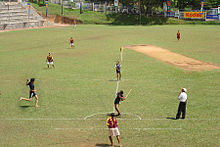
Subscribe to:
Posts (Atom)